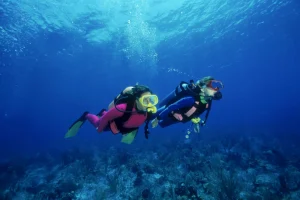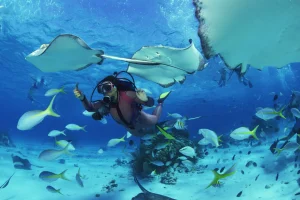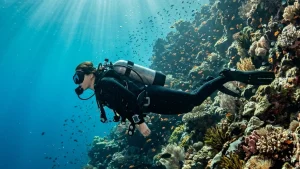
Most visitors don’t realize that the water in Okinawa stays above 20°C even in February, warmer than most of Europe’s summer coastlines. Okinawa’s subtropical waters range from a cool 20°C (68°F) in winter to a peak of 30°C (86°F) in August, making it one of Japan’s most reliably swimmable destinations year-round.
Whether you’re planning a snorkeling trip, a scuba dive, or simply a beach day, this guide draws on Sunkissed Divers’ local expertise to walk you through sea temperatures by month, seasonal hazards, and marine safety essentials. Everything you need to enter Okinawa’s water with confidence.
Okinawa Water Temperature by Month
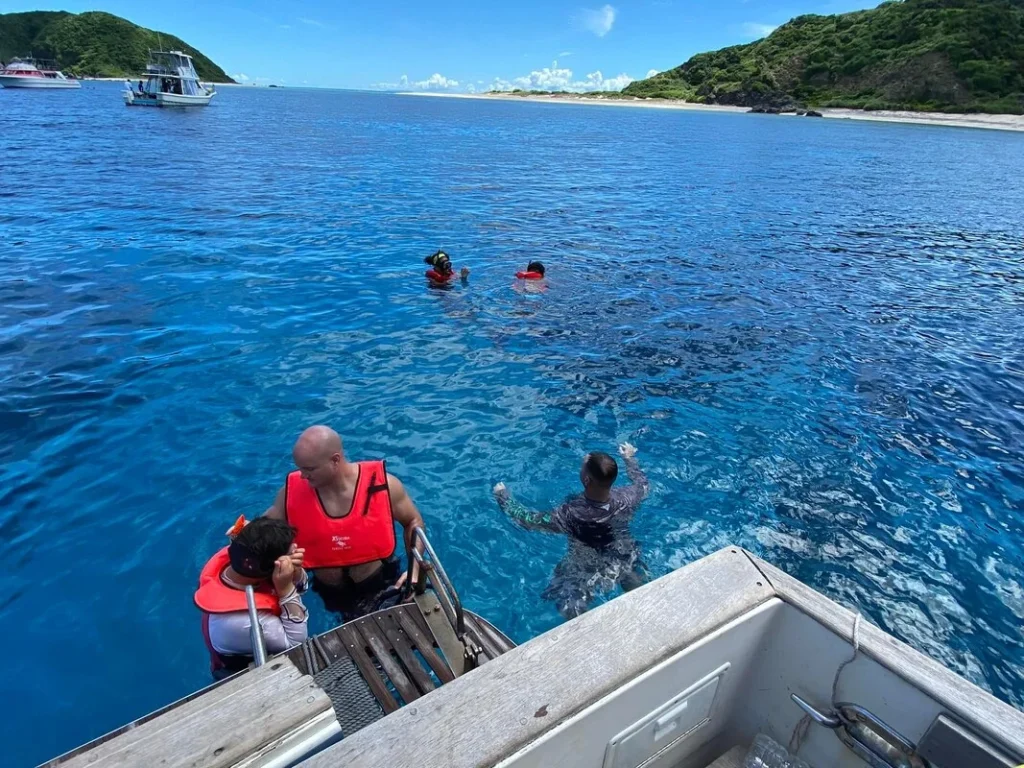
Okinawa’s sea temperature stays comfortable for most of the year, thanks to its subtropical location in the East China Sea. Based on historical sea surface temperature data, monthly Okinawa average water temperatures range from a low of 20°C (68°F) in February to a peak of 30°C (86°F) in August.
Here’s a full monthly breakdown:
| Month | °C | °F |
|---|---|---|
| January | 21°C | 70°F |
| February | 20°C | 68°F |
| March | 21°C | 70°F |
| April | 23°C | 73°F |
| May | 26°C | 79°F |
| June | 28°C | 82°F |
| July | 29°C | 84°F |
| August | 30°C | 86°F |
| September | 29°C | 84°F |
| October | 27°C | 81°F |
| November | 24°C | 75°F |
| December | 22°C | 72°F |
The peak swimming season runs June through October, when sea temperatures sit between 27°C and 30°C. The shoulder seasons of April to May and November offer pleasant 22°C to 26°C water. December through March is cooler at 20°C to 23°C, but still far warmer than mainland Japan at the same time of year. Naha monthly sea temperature averages align closely with wider Okinawa island readings, so these figures apply across most of the main island.
Swimming Conditions in Okinawa Throughout the Year
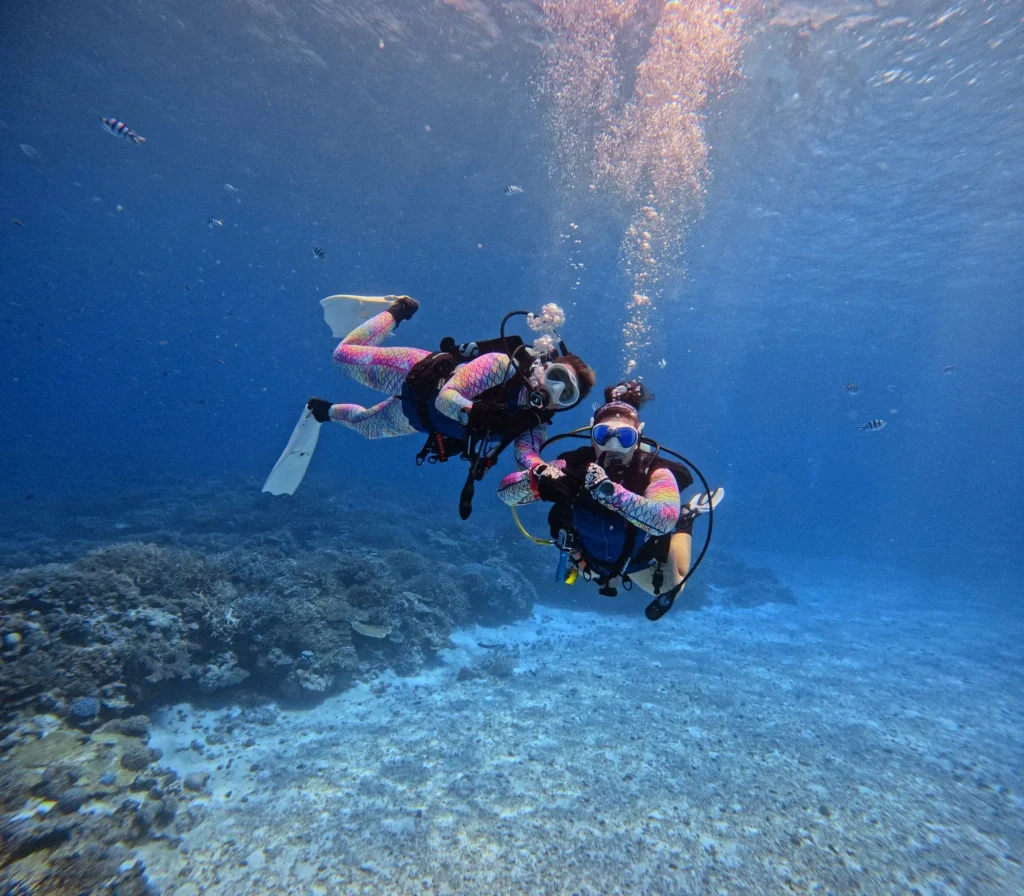
Swimming in Okinawa is enjoyable year-round, with the most popular window running from May through October when official beaches are open, lifeguards are posted, and water temperatures peak. Outside this window, the water is still inviting and divers and swimmers continue to enjoy it; you just want to be aware of a few seasonal factors. Here’s what to keep in mind:
Typhoon season (June to November, peak August to September): Most days during this window are perfectly calm and beautiful. When a typhoon does pass through, beaches may close temporarily and swells can stay elevated for a few days afterwards even if the sky looks clear. Checking real-time alerts from the Japan Meteorological Agency and following local advisories will tell you exactly when conditions are right.
Box jellyfish (May to October): These creatures are active across this window and their stings can be serious. Many beaches post warning signs and some provide protective nets.
Rip currents: Present year-round but significantly stronger after typhoons and during high swell periods. Rip current channels can be 10 to 30 meters wide, with currents strong enough to exhaust even experienced swimmers within minutes. If caught in one, swim parallel to shore rather than fighting it directly.
Cooler months (December to March): This is one of our favourite seasons. Water temperatures sit between 20°C and 22°C, conditions are typically calmer with better visibility than the summer peak, and many of Okinawa’s most beautiful spots are largely empty of crowds. With a light wetsuit, diving and snorkeling are genuinely excellent, and winter conditions around the main island often produce the clearest water of the year, making it a favourite season for underwater photography.
As a general travel habit, it’s worth saving these local numbers in your phone: Coast Guard 118, Ambulance 119, Police 110.
Marine Life Hazards and First Aid Essentials
Knowing what lives at Okinawa’s top dive sites means you can enjoy them safely. We always recommend completing a basic first aid course before diving; your dive guide will also brief you on local hazards before every outing. While most sharks you might encounter in Okinawa are timid reef species that pose no real threat to divers, the smaller creatures below are the ones worth memorising.
If you spot a box jellyfish (10 to 20cm diameter, active May to October), do not rub the sting. Remove tentacles using a gloved hand or card, rinse with seawater rather than fresh water, apply vinegar if available, and seek medical attention.
Stonefish are masters of camouflage, blending into reef rock and rubble. A sting is intensely painful. Immerse the affected area in hot water (as hot as tolerable) immediately and get to emergency care.
If you spot a cone snail’s patterned shell on the reef floor, leave it alone. There is no widely available antivenom for a sting. Immobilize the limb and go to hospital immediately.
Blue-ringed octopus (approximately 12cm) are small but carry enough venom to be life-threatening. There is no antivenom. If a bite causes breathing difficulty, begin CPR immediately and call 119. If you’re not already trained in CPR, a basic first aid certification is worth completing before any diving trip.
Sea urchins are painful but rarely dangerous. Use tweezers to remove spines and apply antiseptic. Do not crush spines deeper into the skin.
The single best rule: do not touch, feed, or collect marine life. This protects both you and the reef, a principle that sits at the heart of responsible diving and long-term reef preservation. A professional dive briefing will cover all of these creatures in context, and knowing what to look for makes every dive richer.
Snorkeling and Diving in Okinawa Waters
Ready to explore? Our guided Okinawa scuba diving tours are designed for every experience level across every season. Our guides at Sunkissed Divers lead small-group dives year-round across the main island, Kerama, and Minna Island. Local knowledge that makes a difference when conditions shift.
For beginners and snorkelers, water temperatures above 26°C from May through October mean you can comfortably snorkel in a swimsuit. Guided tours are strongly recommended for first-timers. Stick to marked zones, snorkel in pairs, and wear a life jacket if you are not a confident swimmer. Water temperatures by month also shape what you’ll need to wear; a shorty works well in summer, while a 5mm wetsuit keeps you comfortable from November through March.
For intermediate and advanced divers, the cooler months from December through March (20°C to 23°C) offer excellent visibility and noticeably fewer crowds. Blue Cave diving tours are available year-round and particularly striking in winter light.
At Sunkissed Divers, every outing includes a full English-language briefing covering current conditions, local hazards, and marine life identification. Exactly the kind of personalised preparation that makes a difference for international visitors exploring an unfamiliar reef environment. Avoid touching coral, do not feed fish, and fin carefully to avoid disturbing sediment.
Water Quality in Okinawa: What Visitors Should Know
The water in Okinawa is generally of excellent quality along the coast. Much of the coastline falls under national park protections, and water clarity at reef sites is consistently high. Near urban areas and harbors, however, heavy rain can introduce surface runoff that temporarily reduces clarity. Checking local beach advisories during and after significant rainfall is a good habit in summer.
Red tide events caused by algae blooms are rare in Okinawa but do occur. Check local advisories before swimming in unfamiliar bays after warm, still weather.
On the broader environmental side, Okinawa’s limestone aquifers serve as critical freshwater reserves and are highly vulnerable to surface contamination. Visitors can help by avoiding reef-damaging sunscreens (look for reef-safe formulations) and following no-waste guidelines at beach sites. Small choices matter: what runs off the land ends up in the same water you swim in.
The same principle applies to which dive experiences you choose to support. Captive whale shark dives offered elsewhere in Okinawa are an example of an attraction we don’t recommend, both for animal welfare reasons and because the practice doesn’t reflect what Okinawa’s wild marine life is actually about. Choosing operators who run ethical, reef-aware trips keeps the ecosystem worth visiting in the first place.
For questions about specific sites and current conditions, our team at Sunkissed Divers is available year-round.
Okinawa Water FAQs
What is the water temperature in Okinawa in summer?
Okinawa’s sea surface temperature peaks between 28°C and 30°C (82°F to 86°F) during the core summer months of June through August, with September still sitting at a warm 29°C. This is the warmest and most popular window for swimming, snorkeling, and scuba diving.
What is the minimum water temperature in Okinawa?
The minimum water temperature in Okinawa is approximately 20°C (68°F), typically recorded in February. While cooler than peak season, it remains far warmer than mainland Japan at the same time of year. A 5mm wetsuit makes diving and snorkeling perfectly comfortable at this temperature.
When is it safe to swim in Okinawa?
Swimming is enjoyable in Okinawa year-round, with the most popular window running from May through October when official beaches are staffed with lifeguards and water temperatures are at their warmest. Outside this window, divers and swimmers continue to enjoy the water comfortably with a wetsuit; you’ll just want to check typhoon alerts, jellyfish warnings, and rip current conditions before heading in, as you would at any subtropical destination.
Do I need a local guide to dive safely in Okinawa?
While experienced divers can explore independently at some sites, a local guide adds real value, particularly for international visitors unfamiliar with Okinawa’s reef layout, seasonal currents, and marine hazards. Site-specific conditions like thermoclines, current shifts, and where the marine life actually shows up at different times of year are things no dive map can fully capture. After nearly a decade running dives across Okinawa, I can tell you the difference between a good dive and a great one usually comes down to having someone with you who knows the site that day.
Ready to get in the water? Book a dive with Sunkissed Divers and our English-speaking team will handle the rest.
Okinawa’s waters reward visitors who take a little time to understand them. From warm summer swells to clear winter diving conditions, there is something here for every level of experience.
See also: What Should Divers Do for Their Own Safety: Complete Dive Safety Guide