
Scuba diving in Japan is one of Asia’s most underrated underwater experiences. From the warm coral gardens of Okinawa in the south to the cold, dramatic kelp forests of Hokkaido in the north, Japan offers more diversity in a single country than most divers expect to find.
After running dive trips here for nearly a decade, I can tell you the best diving in Japan rivals anywhere in the world; you just need to know where to go, when to go, and how to navigate a country where most dive shops still operate in Japanese.
This guide walks you through everything you need to plan a trip: the top dive destinations in Japan, the marine life you’ll actually see, the seasons that matter, certification options, and the practical stuff (gear, safety, finding an English-speaking operator) that most blogs skip over.
Whether you’re a first-timer searching for the best scuba diving in Japan or a certified diver planning a serious dive trip, this is the article I wish had existed when I started teaching here in 2016.
The Most Popular Dive Sites in Japan (Okinawa)
If you’re putting together a Japan dive trip itinerary, these are the sites that consistently make every “best of” list, and a few that should:
Blue Cave (Okinawa). Sunlight enters a sea cave and refracts off white limestone, turning the water electric blue. Shallow (max 12m), beginner-friendly, and one of the most photographed dive sites in Asia.
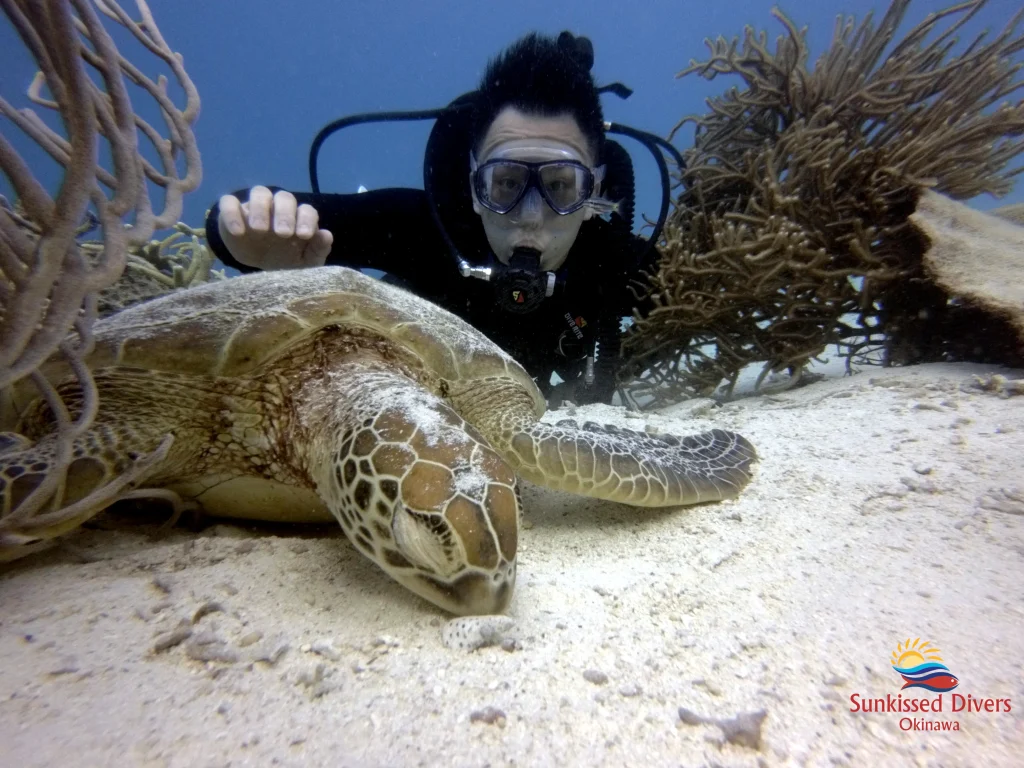
Kerama Islands (Okinawa). A protected national park with green sea turtles on nearly every dive and visibility that regularly exceeds 40m. The Keramas are the single best argument for diving in Japan. Kerama day tours from Naha here.
Minna Jima, “The Croissant Island” (Okinawa). Crescent-shaped island northwest of Motobu with healthy reefs, easy currents, and consistent turtle sightings. Family-friendly.
USS Emmons (Okinawa). Sunk by kamikaze attacks in 1945, the Emmons sits intact at 40m off Kouri Island. Advanced/wreck diver certification required.
Manzamo / Toilet Bowl (Okinawa). A circular limestone pit with a swim-through to open ocean. Surge-driven and dramatic.
Cape Hedo (Okinawa). The northernmost dive site on the main island. Strong currents, big pelagic visits, fewer crowds.
Osezaki (Izu). The classic shore dive of mainland Japan. Volcanic black sand, macro life, and a sheltered cove that’s divable in almost any weather.
Manta Point (Ogasawara). As the name suggests, this is the spot for manta encounters. A year-round cleaning station where resident mantas circle in for parasite removal, often at close enough range that you can hold position and watch the whole interaction play out.
Where the Diving Happens: A Quick Map of Okinawa
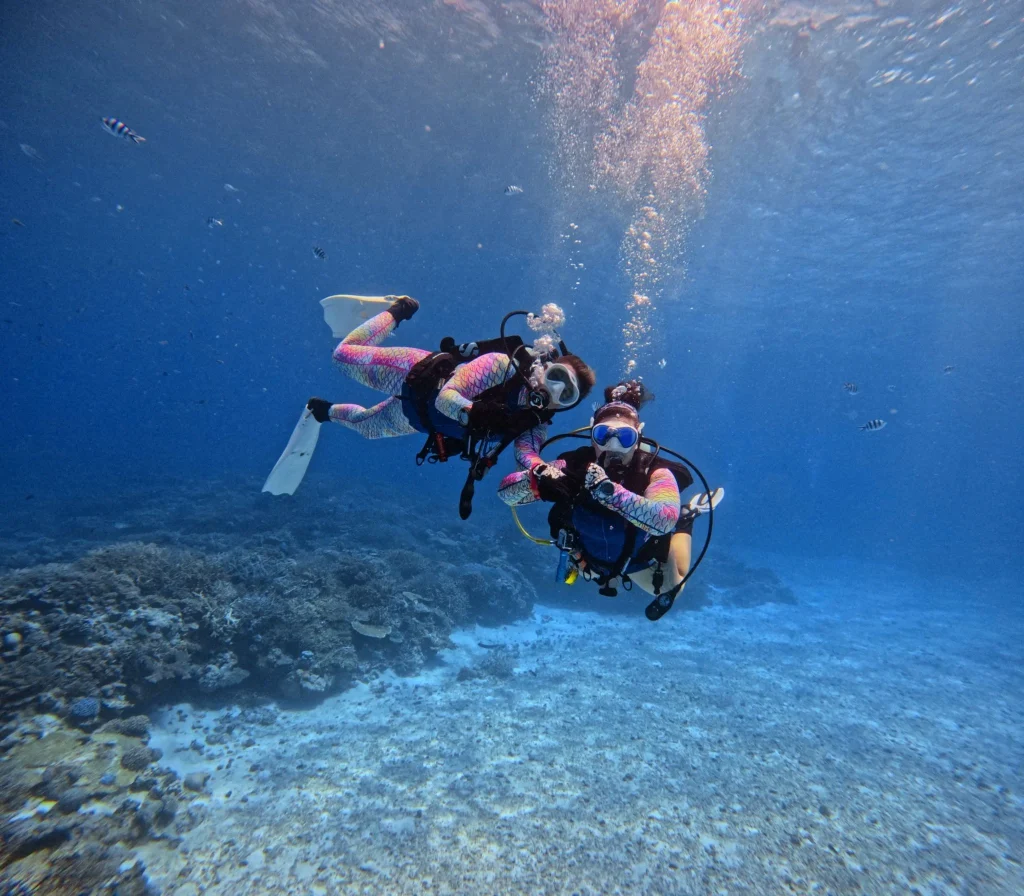
Japan is an archipelago of nearly 7,000 islands stretched across 3,000 km of ocean, but for scuba diving in Japan, Okinawa is the answer. Warmest water, clearest visibility, and the most English-speaking operators, all in one place.
The main island runs about 100 km north to south, and the diving splits into four natural zones:
The West Coast (Onna, Yomitan, Motobu). Sheltered from prevailing east winds, which means more dive-able days and consistent visibility. Most international visitors base themselves here, and it’s where our Onna headquarters sits. First time diving in Japan? Stay on this side.
Central Okinawa (Chatan, Sunabe, Kadena). Easy shore-entry diving near American Village and the U.S. bases. Quick logistics, ideal for refreshers, training, and morning dives before lunch.
The Offshore Islands (Kerama, Tokashiki, Minna). A 30 to 60 minute ferry gets you to protected national park waters with the best visibility and coral health in Japan. Full-day commitment, but worth it.
Northern Okinawa (Yanbaru, Cape Hedo region). Jungle-covered, lightly populated, wildest diving on the island. Stronger currents, bigger pelagic encounters, fewer operators. For divers with experience.
If you’re new to Japan diving, plan a 5 to 7 day trip across two or three of these zones. You won’t repeat yourself, and you’ll see why divers keep coming back to Okinawa.
Marine Life You’ll Actually See When Diving in Japan
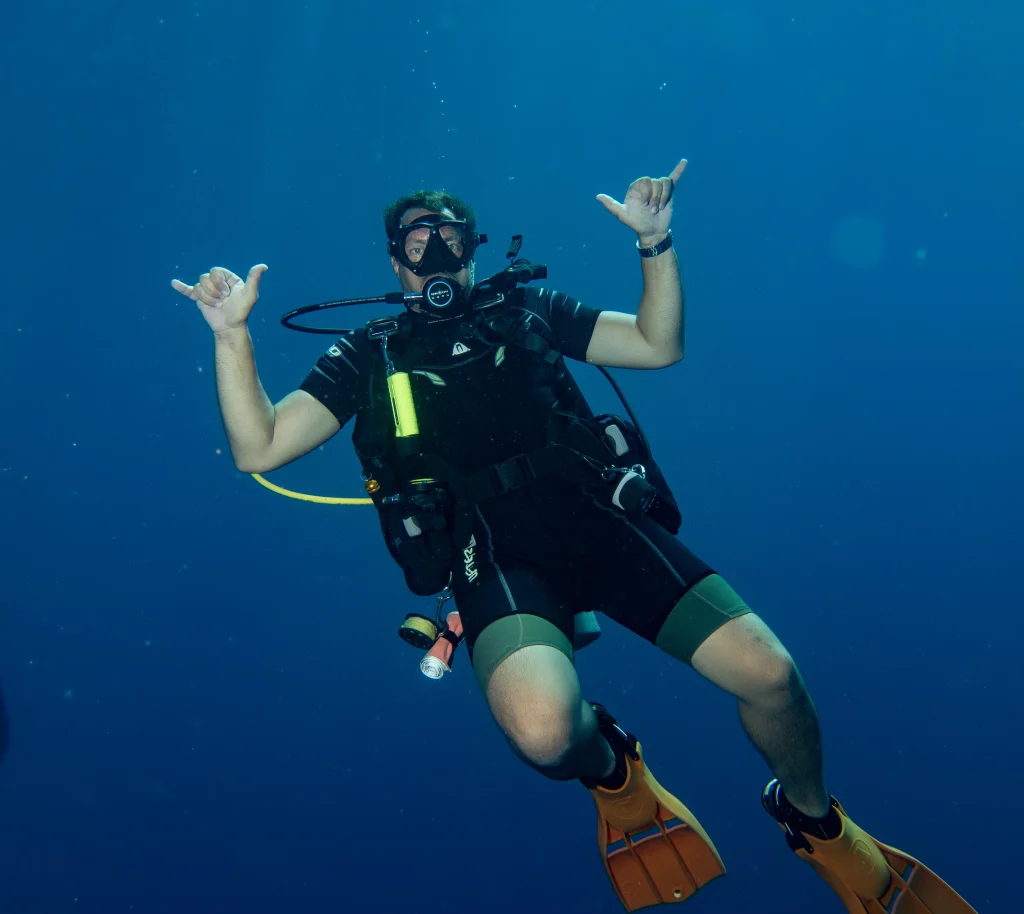
Japan sits at the meeting point of the warm Kuroshio (Black Current) and the cold Oyashio current, which is why the marine diversity is so unusual; you get tropical and temperate species in the same country. Here’s what you can realistically expect to see, by region:
Okinawa (tropical)
- Green sea turtles: common, nearly every dive in the Keramas
- Reef sharks (whitetip, blacktip): Cape Hedo and outer reefs
- Manta rays: seasonal, Yonaguni and Ishigaki
- Clownfish, butterflyfish, parrotfish, anthias: everywhere
- Whale sharks: wild sightings are rare; we recommend against the captive whale shark dives offered elsewhere in Okinawa for ethical reasons
Ogasawara (pelagic)
- Humpback whales: January through April (one of the only dive destinations on Earth where you can encounter wild humpbacks underwater)
- Hammerhead sharks: schools in winter
- Spinner and bottlenose dolphins
- Resident manta rays
Izu / mainland Japan (temperate)
- Hammerhead Shark schools in summer months
- Frogfish, nudibranchs, octopus: strong macro photography
- Large schools of sweetlips and jack
- Occasional thresher sharks at deeper sites
Scuba Diving Seasons in Japan: When to Go
Japan has four distinct diving seasons depending on where you go, but here’s the short version:
Region | Peak Season | Water Temp | Conditions |
|---|---|---|---|
Okinawa | Year-round (peak: Mar to Oct) | 22 to 29°C / 72 to 84°F | Best visibility May to Sep; typhoon risk Aug to Oct |
Ogasawara | Apr to Nov (humpbacks: Jan to Apr) | 20 to 27°C / 68 to 81°F | Limited ferry capacity; book early |
Izu Peninsula | May to Sep | 15 to 25°C / 59 to 77°F | Cold water diving for Hammerhead Sharks |
If you’re flexible on dates, May and October are the sweet spots for Okinawa diving: warm enough water, low typhoon risk, and far fewer crowds than the July to August peak. Golden Week (late April to early May) is the one window I’d warn international visitors about. Japanese domestic tourism is at its highest, prices spike, and dive operators book out weeks in advance.
Getting Your Scuba Diving Certification in Japan
Japan is an excellent place to get certified. The standards are high, the dive sites are forgiving, and most reputable operators teach to PADI or SSI standards that are recognized worldwide.
Where to get certified
Okinawa is hands-down the easiest place to certify in Japan. Warm water (no thick wetsuits), shallow training sites with great visibility, and several English-speaking PADI operators. The Izu Peninsula is fine if you’re already based in Tokyo, but cold-water training is harder and the courses take longer.
What courses are available
- PADI Discover Scuba Diving: a half-day intro for total beginners, no certification at the end
- PADI Open Water Diver Course: the entry-level certification, typically 3 to 4 days, allows diving to 18m worldwide
- Advanced Open Water Diver: usually 2 days, extends depth limit to 30m and adds specialty skills
- Open + Advanced Combo: most common path for visitors with a week in Okinawa
- Rescue Diver, Divemaster, Zero to Hero: for divers building toward a professional pathway
If you’re coming to Japan specifically to get certified, I’d budget 4 to 7 days minimum in Okinawa. That gives you Open Water with a couple of extra days of fun dives, which is genuinely the best way to start your diving life.
Scuba Diving Safety in Japan: What You Need to Know
Diving in Japan is generally safe, with good emergency infrastructure and well-trained operators. A few region-specific things to be aware of:
- Typhoon season (Aug to Oct): operators in Okinawa and Ogasawara will cancel dives in advance of incoming systems. Build buffer days into your trip during this window.
- Currents: sites like Cape Hedo and parts of the Keramas have strong currents. Always dive with a guide who knows the site.
- Marine stingers: sea snakes are common in Okinawa and almost always harmless if left alone. Box jellyfish appear in some areas in summer; operators will brief you.
- Language barriers in emergencies: this is the underrated risk. If you’re diving outside Okinawa or major tourist areas, confirm in advance that your operator can handle a medical situation in English.
Three universals that always apply: never dive alone, do a buddy check before every dive, and stay within the depth limit of your certification. Decompression chambers in Japan are limited. There’s one on Okinawa main island, one on Ishigaki, and several scattered around mainland Japan. Sticking to safe profiles matters.
Scuba Diving Gear and Equipment
Most international visitors don’t bring their own gear to Japan. Flying with a regulator and BCD eats baggage allowance, and rental quality at reputable shops is high. A few things worth knowing:
- Wetsuit thickness: 3mm is fine for Okinawa year-round. Bring or rent 5mm for Izu in shoulder seasons.
- If you have your own mask, bring it. Fit matters more than rental quality.
- Dive computer: most operators rent these, but if you have your own, you’ll dive smarter.
- Sun protection matters. Boat dives in Okinawa summer are brutal without a rash guard and sunscreen (reef-safe, please).
At Sunkissed Divers, we stock premium gear that’s replaced regularly, including options for unusual sizes that smaller shops often don’t carry. Worth asking any operator you book with about gear age and maintenance before paying.
How to Choose a Dive Operator in Japan (for English-Speaking Visitors)
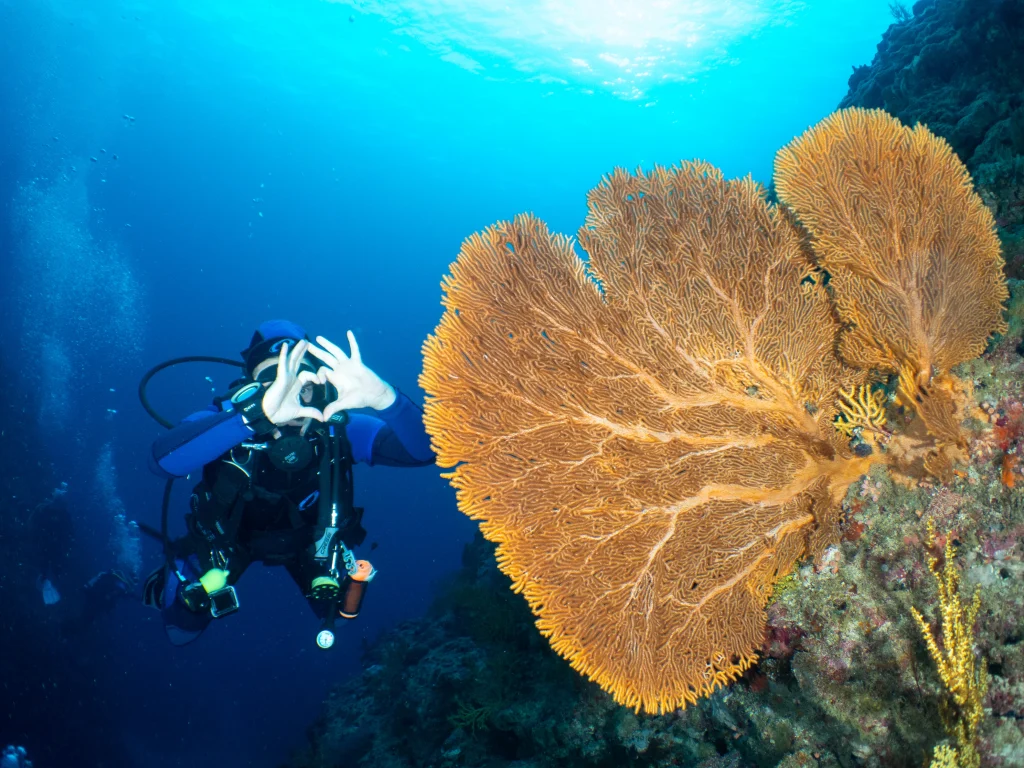
This is the part most blogs skip. Japan has hundreds of dive operators, but the number that operate fluently in English is small, concentrated in Okinawa, and varies wildly in quality. Things to check before you book:
- Is the website actually in English, or just machine-translated? Look at the FAQ. That’s where translation quality shows.
- Are instructors PADI/SSI certified, and does the operator publish instructor numbers?
- Group size: small (4 to 6 divers per guide) means more attention and safer dives. Avoid “cattle boat” operations with 20+ divers.
- Gear rental quality: ask the age of the BCDs and regs. Anything over 5 years should be serviced annually.
- Reviews specifically from English-speaking divers. Japanese-language reviews can hide language-barrier issues.
For Okinawa specifically: we run Sunkissed Divers Okinawa, which has been the largest English-first PADI operator on the island since 2016. There are several other good operators here, and the best one for you depends on which side of the island you’re staying on. Onna and Yomitan are the most common bases for visiting divers.
Scuba Diving in Japan: Frequently Asked Questions
Is Japan good for scuba diving?
Yes. Japan offers some of the most diverse scuba diving in Asia. Okinawa has tropical reefs and warm water year-round, the Ogasawara Islands offer rare humpback whale encounters, and the Izu Peninsula provides temperate diving accessible from Tokyo. Japan is genuinely a top-tier diving destination, particularly for divers who want variety in a single trip.
Where is the best scuba diving in Japan?
Okinawa is widely considered the best place for scuba diving in Japan. Highlights include the Blue Cave at Maeda Point, the Kerama Islands (a protected marine park 30 km from Naha), and the USS Emmons wreck dive. The Ogasawara Islands offer more pelagic life but require a 24-hour ferry from Tokyo. For divers based on the mainland, the Izu Peninsula is the most popular option.
Can you scuba dive in Japan year-round?
Yes, in Okinawa. Water temperatures stay between 22 and 29°C / 72 and 84°F year-round, and dive operators run trips every month. Peak season is March through October. Mainland Japan and Izu have shorter seasons (typically May to September for comfortable diving).
How much does scuba diving in Japan cost?
In Okinawa, fun dives typically cost 13,000 to 18,000 JPY for a two-tank boat dive (roughly USD $90 to $125), with gear rental included. PADI Open Water certification ranges from about 65,000 to 85,000 JPY. Prices in mainland Japan and remote regions like Ogasawara are higher.
Do I need to speak Japanese to scuba dive in Japan?
No, but you need to book carefully. Most dive operators in Japan operate primarily in Japanese. In Okinawa, several PADI-certified operators (Sunkissed Divers included) work primarily in English. Outside Okinawa and major tourist areas, English-speaking operators are rare. Confirm language before booking.
What dive certification do I need for diving in Japan?
Any internationally recognized certification works: PADI, SSI, NAUI, and BSAC are all accepted. For most popular dive sites in Japan, an Open Water Diver certification (18m / 60ft depth limit) is enough. For wreck dives like the USS Emmons or deeper sites, you’ll need Advanced Open Water (30m / 100ft).
When is typhoon season in Japan and does it affect diving?
Typhoon season runs roughly August through October, mainly affecting Okinawa and the southern islands. Reputable operators cancel dives 24 to 48 hours ahead of an incoming system. If you’re booking during this window, build 1 to 2 buffer days into your itinerary.
Planning Your Scuba Diving Trip to Japan
If you’re trying to figure out where to start with scuba diving in Japan, here’s the short version: Okinawa for first-time visitors and tropical diving, Ogasawara for serious pelagic encounters, Izu for accessible diving near Tokyo. Plan around your dates, your certification level, and which marine life you most want to see.
We’re based in Okinawa and we focus specifically on English-speaking visitors: military families, international travelers, and people traveling Japan who want to add diving to their trip. If you’re planning a visit, send us a message with your dates and experience level and we’ll help you figure out the best dive sites for your trip. We’re happy to answer questions even if you end up booking with another operator. Getting more international divers into Japan is the goal.
To dig deeper into specific Okinawa dive sites, start with the Blue Cave guide, the Kerama Islands page, or our full price list for current rates on courses and fun dives.


