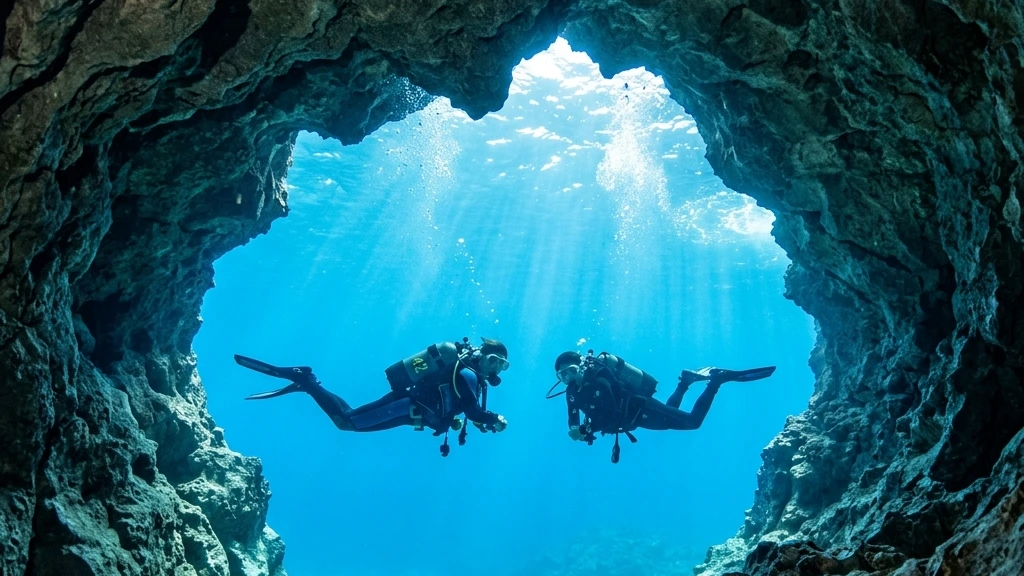
Sunlight filters through a submerged opening, turning the water electric blue. You are floating inside a sea cave on the west coast of Okinawa, looking up at walls that glow in a way no photograph fully captures, and you got here in under an hour from Naha. That is Cape Maeda in Okinawa, Japan, captured in a single image, which is why this site stays at the top of every itinerary I build for first-time visitors.
At Sunkissed Divers, we take guests here year-round. Whether you call it Maeda Misaki or Maeda Point, the site always delivers the same three things: shallow reef for beginners, a 40-meter wall for experienced divers, and a west-facing coastline with some of Okinawa’s best sunsets. After nearly a decade running dives here, these are the five things we wish every visitor knew before arriving.
Tip 1: Maeda Flats Is the Entry Most Visitors Walk Right Past
Maeda Flats is the sandy beach entry to the north of the cape. At Sunkissed Divers, we genuinely think most visitors walk straight past it on their way to the main staircase.
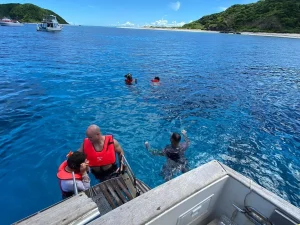
Depth across the reef flat sits at roughly 0.6 to 1.5 meters. That makes it the right choice for families, beginners, and anyone not yet comfortable with rougher conditions.
Clownfish, reef fish, and coral gardens are visible in shallow water with excellent visibility. On days when the main point shows yellow or borderline conditions, the flats often remain swimmable.
Treat it as your Plan A on those days, not just a fallback.
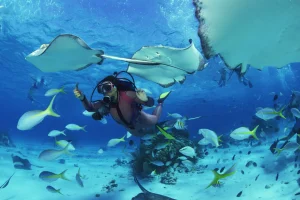
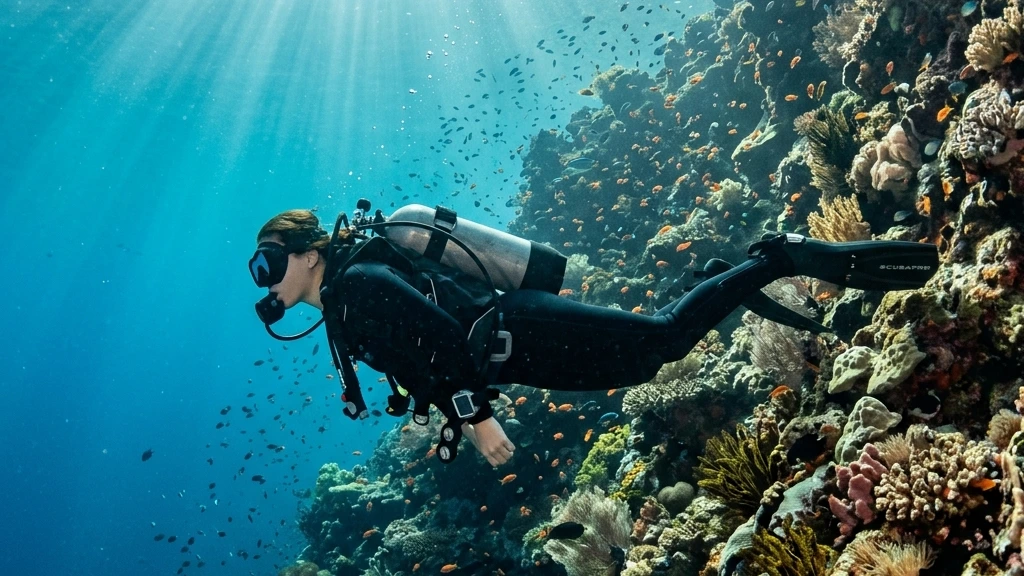
The main point of entry is different. A staircase descends to a rocky shoreline, sure footing required, with a wall that drops to 30 to 40 meters. Regular sightings at depth:
- Stingrays and cuttlefish along the wall
- Batfish in loose schools near the cave entrance
- Grouper and lionfish tucked into the rock formations
The depth profile and current potential make the area a site for certified divers and experienced swimmers. If that is not you yet, the Flats is the right choice, and Okinawa’s dive sites have options for every level.
Tip 2: Check the Flag That Morning, Not the Night Before
The flag system at Cape Maeda is managed daily by the facility office. Green means safe; yellow means caution; red means stay out.
Conditions here shift within hours. A green flag from the evening before means nothing by 9 a.m. the next day.
There are real hazards to know about. Rip currents near the point, surge at the cave entrance, and roughly 100 steps that turn slippery when wet can all catch visitors off guard.
According to a report in Stripes Okinawa, drawing on Asahi Shimbun data, Cape Maeda is among just seven locations in Japan to have recorded more than ten water-related fatalities over ten years. That number is not a warning to stay away; it is a reason to check on the day and go in with a guide.
A red flag means no entry, no exceptions. Anyone without open-water experience should always go in with a certified guide, regardless of flag color.
Tip 3: The Cave Needs a Guide for One Specific Reason
The Blue Cave, known as Ao no Dokutsu in Japanese, is the main reason most people come to Cape Maeda. Sunlight enters from below the waterline and fills the interior with a glow that catches the attention of every first-time visitor.
Snorkelers catch it at the surface. Divers see the full cave structure below — we cover the dive profile, what you’ll spot inside, and how to book on our Blue Cave at Maeda Point page.
The reason to book a guide here is not just safety. It is positioning. On rough days, the surge at the entrance is unpredictable, and a guide who runs this site weekly knows exactly where to place you to catch the light at its best. Going in solo on a day with any swell, you will likely miss the effect entirely.
The cave and surrounding reef are also ecologically sensitive — a peer-reviewed study on Cape Maeda’s reef health uses the shallow waters near here as a primary site for reef-building coral research. Responsible diving practices protect what makes this place worth visiting year after year.
Tip 4: Timing Matters More Than Most Visitors Expect
In peak summer months, the parking lot fills by 9 a.m., and tour slots are claimed by 10 a.m. Arriving by 8 a.m. is the only reliable way to secure a space and get the water to yourself for the first hour.
The better-kept secret is November through March. Visibility improves, water sits around 20 to 22°C with a light wetsuit, and the reef is practically yours.
We push this window every time for anyone with flexibility. The typhoon risk drops to zero, and experiencing Cape Maeda in Okinawa, Japan, with far fewer people on the water is a completely different experience.
| Season | Months | Water Temp | Visibility | Crowds | Typhoon Risk |
| Spring | Mar–May | 21–26°C (70–79°F) | Good | Low to Moderate | None |
| Summer | Jun–Aug | 28–30°C (82–86°F) | Good | Very High | Moderate to High |
| Fall | Sep–Oct | 27–29°C (81–84°F) | Excellent | High | Moderate |
| Winter | Nov–Feb | 20–24°C (68–75°F) | Excellent | Low | None |
Tip 5: Bring Your Own Mask and Confirm Age Limits Before You Book
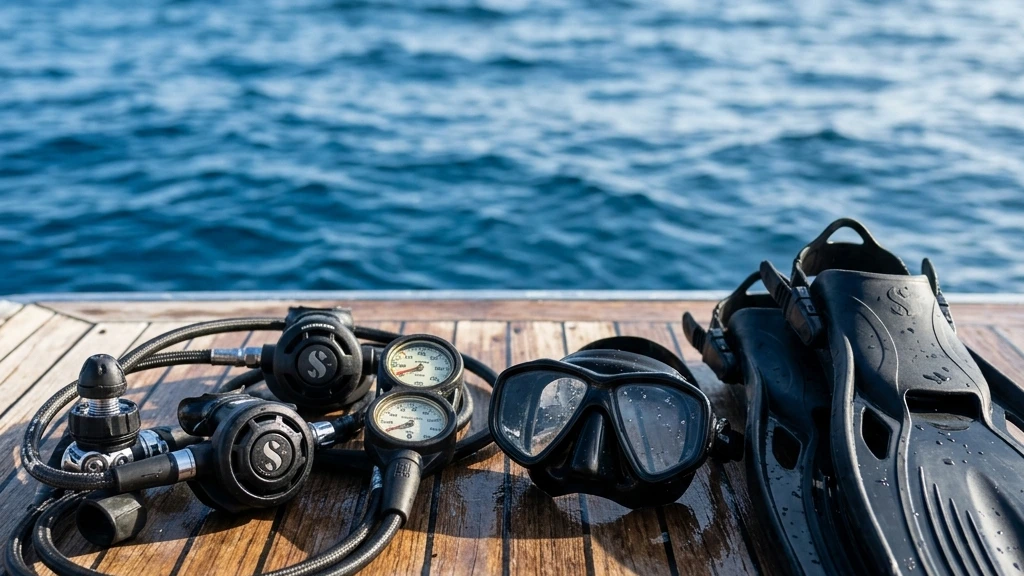
If you own a mask, bring it. Personal fit makes a real difference over a rental rack, and it is the single easiest thing to do before arriving. If you don’t own one, our snorkel gear rental covers everything you’ll need for the day.
Guided snorkeling tours typically run 3,000 to 8,,000 yen and include all gear. Beginner scuba ranges from 8,000 to 21,,000 yen and covers full equipment plus instruction — if you want to get fully certified, our Open Water Diver Course takes you from no experience to PADI-certified in a few days.
Before booking, confirm age minimums with your operator. Beginner scuba generally starts at age 10, and snorkeling tours typically accept children from age 6 with a supervising adult.
The roughly 100 steps to the water are steep and become slippery when wet. The boardwalk at the top is flat and wheelchair accessible, but the water entry itself is not.
Plan Your Cape Maeda Dive with Confidence
Check the flag before you touch the water, pick the right entry for your level, and book a guide if the cave is on your list. Whether it is your first dive or your hundredth, arriving prepared is what makes a day at Cape Maeda in Okinawa, Japan, worth the trip.
We have been running dives at Cape Maeda since 2016, and every trip still surprises us a little, because the cave never really looks the same twice. Send us your dates, experience level, and group size, and book your Cape Maeda dive when you are ready.
Frequently Asked Questions
How Do I Get to Cape Maeda from Naha?
Drive north on the Okinawa Expressway, exit at Onna Interchange, and follow the English signs for Cape Maeda from there. The drive takes about 50 minutes from Naha and about 30 minutes from Kadena or the Camp Foster area, and there is no direct bus, so a rental car or a guided tour with pickup is your most practical option.
What Is the Flag System at Cape Maeda?
Green is open, yellow is caution, and red means stay out. Check on the day you go, not the night before, because conditions here can shift within hours, and the red flag is non-negotiable.
Can I Snorkel at Cape Maeda Without a Guide?
At Maeda Flats, yes. The shallow and calm conditions make it very doable on your own. At the Point, we would always recommend a guide; the rocky entry, current, and surge near the cave entrance are more demanding than they look in photos.
When Is the Best Time to Visit Cape Maeda?
The warmest water runs from May through October, but June through August brings big crowds and typhoon risk. If you have flexibility, November through March is the best window to visit. You will have better visibility, fewer people around, and the reef will practically be all yours.